TOP® Fiber Cables, Bundles & AssembliesTOP® Fiber Cables, Bundles & Assemblies
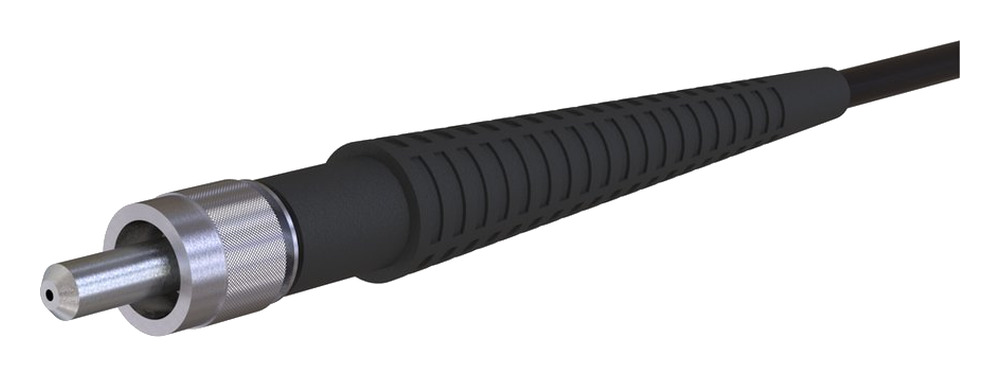
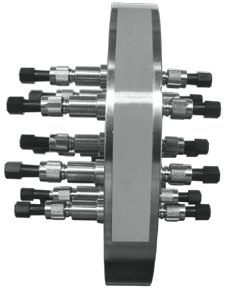
We provide fiber solutions, carefully designed to meet your needs. Detailed parameters for fiber feedthroughs and collimators are given in Sections 12 and 13.
Single-Fiber Cables
Wide operating temperature range
Excellent laser-damage resistance
Special jackets available
Consistent core-to-cladding ratio along the entire fiber
Fully customizable
Optional fiber: all TOP® fibers
Anti-reflection (AR) coating
Connectors: SMA | FC/PC | ST | D80 | QBH | E2000
Other interfaces (including custom ferrules) available on request
Detailed parameters for fiber feedthroughs and collimators are given in sections 12 and 13.
TOP® Fiber Bundles · Special Multi-Fiber Assemblies
High transmission
Large effective diameter
Long service life
Excellent high-temperature performance, up to +600 °C and above
Eliminated gaps between fibers
A range of ready-to-use assemblies
Uniform distribution in multi-branch bundles
Custom fiber arrangements
| Available Wavelength | Numerical Aperture (NA) |
|---|---|
| 180 – 2400 nm | Low 0.12 · Standard 0.22 · High 0.28 · 0.37 (TOP® NIR-Ge) · all ± 0.02 |
Bundle Options
Optional fiber: all TOP® fibers
Effective end-face geometries: round, semicircular, square, rectangular, linear, ring, segmented ring
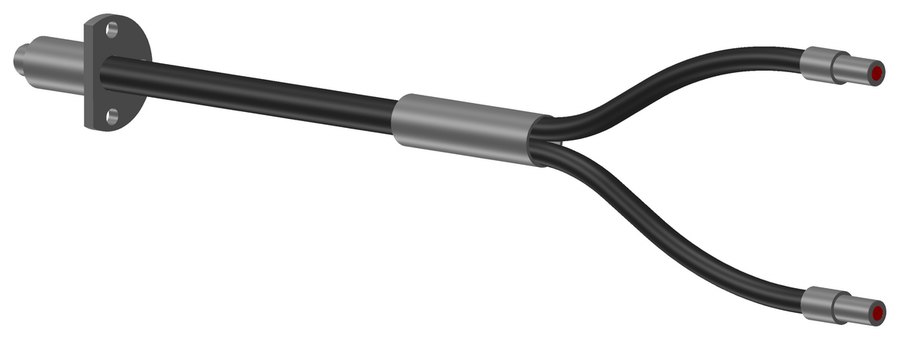
Design: single-branch, dual-branch or multi-branch
Bundle type: bonded end or fused end
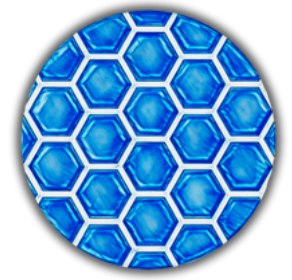
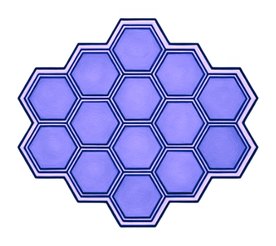
Fused end: the fusing process merges the fibers in the bundle, eliminating gaps to form a honeycomb structure. This structure reduces signal loss and improves uniformity within the bundle, significantly raising transmission efficiency.
TOP® Fiber Bundle End-face Processes
Bonding
Bonded bundles offer unrivalled flexibility and can be made in a wide range of diameters and geometries.
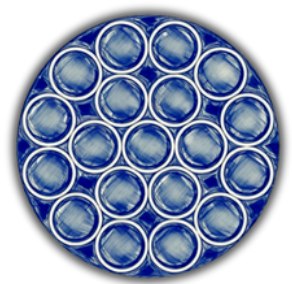
Sorting
Sorting the fibers distributes power evenly between bundle branches and improves measurement accuracy through spatial mapping of the fibers.
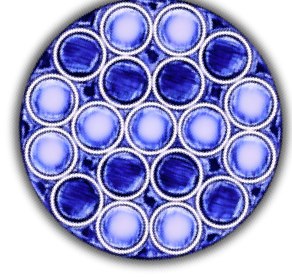
Fusing
In fused bundles, eliminating the gaps between fibers raises the fill factor and improves transmission by up to 20%.
Anti-reflective (AR) Coating
AR coatings effectively reduce back-reflection at fiber end faces, directly improving transmission by about 3.5% per end face.