
TOP® UV-HC / NIR-HC Hard-polymer-clad FiberTOP® UV-HC / NIR-HC Hard-polymer-clad Fiber
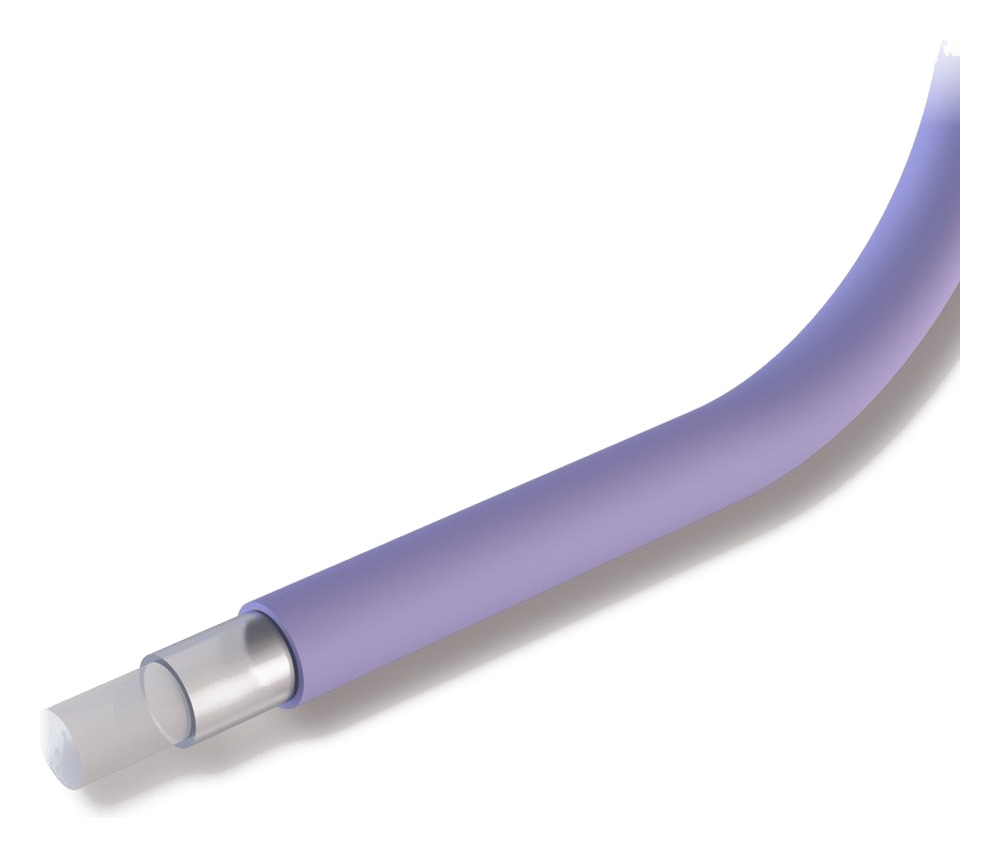
Our hard-polymer-clad fibers have a high numerical aperture and suit a wide range of applications, from remote illumination to photodynamic therapy. This premium fiber is a cost-effective alternative to quartz/quartz fibers. Discover our range of jacket types and sizes, including options precisely customized to your specifications.
Wavelength · Numerical Aperture (NA)
| Wavelength | Numerical Aperture (NA) |
|---|---|
| TOP® UV-HC 300 – 1100 nm · TOP® NIR-HC 400 – 2200 nm | Low 0.37 ± 0.02 · High 0.48 | 0.50 | 0.52 ± 0.02 | 0.57 | 0.62 ± 0.02 |
Advantages
Cost-effective compared with silica/silica fiber
High concentricity
All-dielectric, non-magnetic design
Step-index profile
Biocompatible materials
Can be sterilised with ethylene oxide (ETO) and similar methods
Construction
Silica glass core · hard polymer cladding · jacket
Jacket
| Jacket | Operating Temperature |
|---|---|
| ETFE(Tefzel®) | -40 to +150 °C |
| Nylon | -40 to +100 °C |
| Acrylate | -40 to +85 °C |
| Acrylate DeSolite® DF-0009 | -40 to +150 °C |
Technical Parameters
| Parameter | Specified value |
|---|---|
| Operating Temperature | -40 to +150 °C |
| Core Diameter | Available from 100 to 2000 µm |
| OH Content | TOP® UV-HC: high (< 700 ppm) · TOP® NIR-HC: low (< 1 ppm) |
| Standard Proof Test | 100 kpsi |
| Minimum Bend Radius | 50 × cladding diameter (short-term mechanical stress) · 150 × core diameter (high-power laser use) |
Attenuation
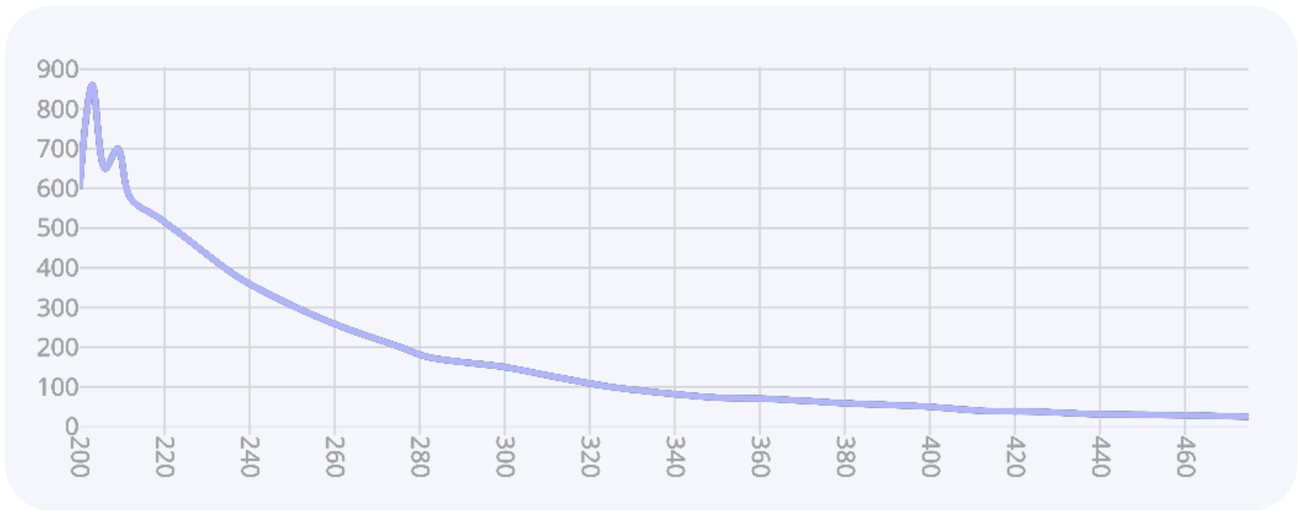
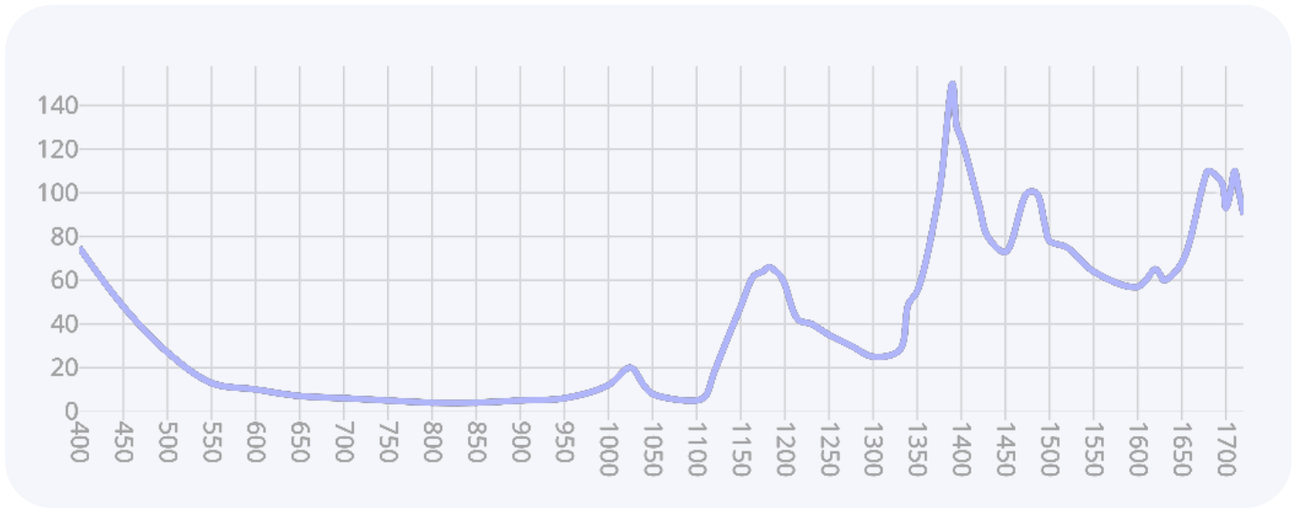
The charts below summarise the attenuation at different wavelengths:
Applications
The preferred solution for remote illumination, photodynamic therapy and many other applications.